Email Filters and a Missed Notice
Spam filtering is the most effective piece of infrastructure most people own and by some distance the least examined. It works silently, it makes decisions that nobody ever reviews, and occasionally one of those decisions costs somebody a deadline.

The rule in short
Where electronic service is permitted, a message routed to a spam or quarantine folder has generally been delivered, because the classification was made by the recipient's own system after the message arrived. That places the risk with the recipient, makes whitelisting and quarantine review worth doing, and means the technical evidence has to be preserved quickly if the point is ever taken.
Filtering happens after delivery, which is the fact that decides most of these arguments. The message reached the recipient's system; the recipient's system decided where to put it.
How filtering affects delivery
Delivery happens first. The receiving server accepts the message and then classifies it, which means the message arrived before anything decided it was unwanted.
Quarantine is a local decision. Where a message is placed afterwards is a choice made by software the recipient controls or has contracted for.
Rejection is different. A message refused at the server generates a bounce to the sender, which is a genuine non-delivery and puts them on notice.
Silent discarding is the worst case. Some configurations delete rather than quarantine, which leaves no record at either end and nothing to retrieve.
Institutional senders are frequently caught. Automated messages, unusual formatting and bulk sending patterns all raise classification scores.
Rules accumulate. Filters built years earlier by somebody who has left continue applying to messages nobody anticipated.
Forwarding worsens it. Messages redirected through another account are more likely to be misclassified at the second hop.
Attachments matter. Certain file types and sizes trigger blocks independently of any assessment of the content itself.
Reputation scoring is opaque. Whether a sender is trusted depends on aggregated signals about their domain and infrastructure that neither party can see, let alone influence in the short term.
Who bears the risk
Generally the recipient. The system that classified the message belongs to them, and the sender did everything the rules required.
Because the alternative is unworkable. A sender cannot verify how each recipient's filtering is configured, and no rule could sensibly require it.
Bounces shift it back. Where the sender received a rejection notice, they knew delivery failed and cannot rely on the service, per service by email and by portal.
Nominated addresses carry obligations. A party who nominated an address undertook, in substance, to monitor it.
Consent to electronic service assumes competence. Agreeing to receive documents electronically implies a working ability to do so.
Relief remains available. Genuine non-receipt can still support an application, though the technical evidence has to be there.
Repeated failures look worse. One filtered message is an accident; three is a system nobody is maintaining.
Portals are the same analysis. Notification alerts caught by filters change nothing where availability is the operative event, per notices that arrive only in a portal.
| Outcome | Delivered? | Whose risk |
|---|---|---|
| Accepted and quarantined | Yes | Recipient |
| Accepted and discarded | Yes | Recipient |
| Rejected at the server | No | Sender |
| Delivered to inbox, unread | Yes | Recipient |
| Address invalid | No | Sender |
Avoiding it
Whitelist known senders. Opposing representatives, forums, agencies and portal notification addresses, added deliberately at the start of a matter.
Review quarantine on a schedule. Weekly at minimum, and daily while a period is running, because a folder nobody opens is a folder that catches things permanently.
Assign responsibility. Somebody specific reviews it, with cover arranged for absence, rather than everybody assuming somebody else does.
Audit the filter rules. Rules created years ago by people no longer present are a recurring cause and are invisible until somebody looks.
Avoid unnecessary forwarding. Each additional hop increases misclassification, and messages should arrive where they will be read.
Use a monitored address. A shared mailbox with no owner is functionally an unmonitored channel however many people can technically access it.
Tell senders the correct address. Confirming the address for service in writing at the outset removes an entire category of problem.
Test occasionally. Sending a message from an unfamiliar external address confirms that ordinary correspondence is actually arriving.
Keep a second channel open. Where a matter is active, agreeing that anything urgent will also be sent by post or telephoned through removes the single point of failure entirely.
Mail server records, quarantine contents and filter configurations are retained for days rather than months. The evidence that would prove a message was misclassified is frequently gone before anybody decides to make the argument.
If something was missed
Preserve everything immediately. Quarantine contents, filter configurations and server logs are frequently retained briefly and overwritten automatically.
Establish what actually happened. Delivered and quarantined, rejected at the server, or silently discarded are three different findings with different consequences.
Get evidence from whoever runs the system. An administrator's statement about configuration and logs carries far more weight than the party's own account.
Act the same day. Promptness after discovery is the factor most within the recipient's control and the one most commented on.
Retrieve the message. A quarantined message is usually recoverable, and the document itself may still allow a response within the period.
Address the sender's position. They will produce a dispatch record, and the response has to engage with it, per rebutting the presumption of receipt.
Explain the fix. What has changed in the configuration since is more persuasive than what went wrong before.
Check for others. One quarantined message from a sender usually means the whole sender is being filtered.
What does not work
Asserting non-receipt without evidence. The technical records either support the account or contradict it, and assertion alone rarely moves anything.
Blaming the sender's formatting. How a message was composed is not usually treated as a reason it was properly filtered out.
Discovering it weeks later. Delay compounds the problem and removes the strongest argument available.
A general complaint about spam volume. Everybody receives volume, and the response to it is a review process rather than an excuse.
Relying on never having agreed to email. Where an address was nominated or consent was given, the point has usually gone.
Pointing at an unmonitored shared mailbox. An address nobody owns is a choice the recipient made rather than a misfortune.
Arguing after taking a step. Engaging with the matter without reserving the point frequently waives it.
Repeating the failure. An identical problem arising after the first application removes whatever sympathy remained.
Treating it as somebody elses fault. The system belongs to the recipient or to a supplier they chose, and an explanation framed as blame rather than as correction reads badly.
Filtering happens after delivery, so a message routed to spam or quarantine has generally been delivered and the classification was the recipient's system's decision.
That places the risk with the recipient, with the exception of messages rejected at the server, where the sender receives a bounce and is on notice that delivery failed.
Prevention is inexpensive: whitelist the senders who matter, review quarantine on a schedule, assign the task to a named person, audit old filter rules and avoid unnecessary forwarding.
Where something was missed, preserving the technical evidence immediately matters more than anything else, because logs and quarantine contents are short-lived.
What does not work is assertion without evidence, delay after discovery, complaints about volume, and repeating the same failure after having explained it once.
Points to carry away
- Filtered messages are usually still delivered.
- Classification is the recipient's system's decision.
- Quarantine folders need reviewing on a schedule.
- Whitelisting known senders prevents most failures.
- Server logs are short-lived and must be preserved fast.
Questions readers ask
Has a message caught by a spam filter been served?
In most situations, yes. Filtering takes place after the receiving server has accepted the message, which means delivery occurred and the recipient's own system then decided where to put it. The analysis is different where the server rejected the message outright, because the sender receives a bounce and is on notice that delivery failed. That distinction between quarantine and rejection is usually the first thing to establish when the question arises.
What evidence is needed to argue that a filter caused a missed deadline?
Technical records: the quarantine contents showing the message, the filter configuration that classified it, and server logs recording what happened and when, ideally supported by a statement from whoever administers the system. Those records are frequently retained for a short period and overwritten automatically, so they have to be preserved immediately. An assertion of non-receipt unsupported by any of that is unlikely to displace the sender's dispatch record.
What is the cheapest preventive step?
Whitelisting. Adding the addresses that matter — opposing representatives, the forum, any agency, and portal notification senders — to a safe list at the start of a matter prevents the most common failure and takes minutes. The second step is assigning a named person to review the quarantine folder on a defined schedule, weekly as a minimum and daily while a period is running, with cover arranged for absences.
Sources
- Federal Rules of Civil Procedure — Rule 5(b)(2)(E), Service by Electronic Meanslaw.cornell.edu
- Federal Rules of Civil Procedure — Rule 5(b)(3), Service by Electronic Means Not Effectivelaw.cornell.edu
- Federal Rules of Civil Procedure — Rule 60(b)(1), Mistake or Excusable Neglectlaw.cornell.edu
- Federal Rules of Evidence — Rule 803(6), Records of a Regularly Conducted Activitylaw.cornell.edu
- Federal Rules of Appellate Procedure — Rule 25(c), Manner of Servicelaw.cornell.edu
- Legal Information Institute — Service of Processlaw.cornell.edu
Urban Justice Docket is a publication, not a law firm. This article states general rules and cites its sources; it is not advice about any particular case, and the law differs by state and changes over time.
More in Receiving Notice

Refusing to Accept a Document
A recipient who declines to take a document is generally treated as having been served, provided the server identified them and brought the document to them. Refusal also produces a contemporaneous record describing exactly what happened, which is unhelpful later, and it removes any argument that the recipient did not know a matter existed.
Returned Mail, and What It Proves
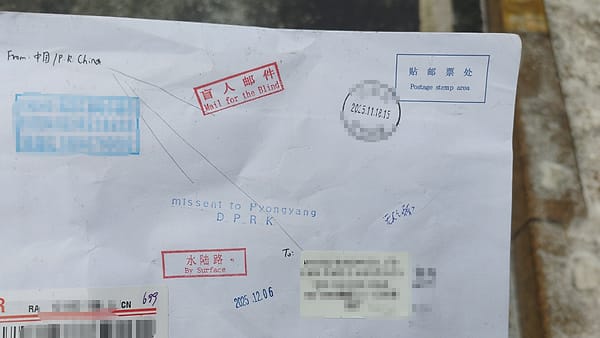
Returned mail proves that delivery did not occur and indicates why, and the reason is the useful part. Unknown at the address, refused, unclaimed, vacant and insufficient address each point at different conclusions about whether the record is stale, whether the recipient is avoiding contact, and what the sender should do next.
Notice to a Representative Rather Than a Party
Where a representative is on record, service on them is generally service on the party, and the party is bound by it. That arrangement works well until it breaks: a withdrawal never filed, a handover between advisers, a firm that closed, or a representative who never passed the document on. The record is what governs, and keeping it accurate is the whole of the protection.