An Address on File That Is Wrong
There is a difference between an address that was correct and stopped being correct, an address that was recorded incorrectly, and an address that was never the recipient's at all. Service at each of them ends differently.

The rule in short
Where an address on file is wrong, the outcome depends on why. A stale address is generally the recipient's risk, a transcription error by the sender is generally theirs, and an address that was never connected to the recipient rarely supports valid service at all. Establishing which situation applies is the first step in any argument about it.
Arguments about a wrong address are really arguments about who should have known better. The categories are distinct and the answers differ considerably between them.
The categories
Stale. Correct when recorded, and overtaken by a move that was never notified, which is the commonest situation by a distance.
Mistyped by the sender. A transposition or omission introduced when the sender copied the address from a correct source.
Mistyped by the recipient. An error in what the recipient supplied, which usually leaves the risk with them.
Recorded incorrectly by the body holding it. An administrative error in a register or case record, which is a third and different situation.
Never connected to the recipient. An address obtained from an unreliable source and never verified against anything.
Deliberately false. Supplied by a recipient to avoid correspondence, which usually leaves them without any complaint.
Correct but incomplete. Missing a unit number, a building name or a floor, which frequently produces non-delivery in multi-occupancy buildings.
Correct and unreachable. A valid address at which delivery cannot practically be made, such as a secured building with no accessible point of receipt, per the notice nobody ever saw.
Correct for one purpose and not another. A registered address and a service address may differ, and using the wrong one is a real defect.
Who carries the risk
Stale addresses usually fall on the recipient. The obligation to keep records current sits with them, per keeping an address current.
Sender errors usually fall on the sender. Service at an address the sender created by mistyping is generally defective.
Administrative errors are more mixed. Where a body recorded something wrongly, the outcome depends on who could reasonably have detected it.
Unverified addresses fall on the sender. A sender who used an address without any basis for believing it correct is in difficulty.
Knowledge shifts everything. A sender who knew the address was wrong and used it anyway is in a materially worse position.
Returned mail shifts it too. Continuing to serve at an address after items have come back undelivered is hard to defend.
Prejudice matters throughout. What the recipient actually lost by the error influences every version of the argument.
Multiple errors compound. Where both parties made mistakes, the analysis usually turns on who could most easily have prevented it.
| Situation | Usual risk holder | Practical answer |
|---|---|---|
| Recipient moved, no update | Recipient | Service usually stands |
| Sender mistyped | Sender | Re-serve |
| Body recorded wrongly | Mixed | Correct and re-serve |
| Address never verified | Sender | Verify and re-serve |
| Known wrong, used anyway | Sender | Hard to defend |
When it surfaces
Non-delivery. Returned items are the earliest and most useful warning, if anybody reads them.
A recipient who appears late. Somebody discovering a matter after a decision is the usual route to the argument.
Enforcement. Steps taken to enforce frequently reach the recipient when nothing else did.
A third party mentioning it. Relatives, employers and neighbors are a common channel for the first indication.
A conflicting record elsewhere. Where two bodies hold different addresses, one of them is wrong.
A representative's file. Advisers frequently hold the correct address while the forum's record does not.
Long after everything. Address problems can surface years later, at which point the record is all anybody has.
During a check nobody was asked to do. Which is the best outcome available and the reason verification is worth doing.
Nobody wins an argument about a wrong address by establishing that it was wrong. The question is always why it was wrong, who supplied it, and who was in a position to notice before the document was sent.
What to do about it
Correct the record immediately. Whatever the argument about the past, the future depends on the file being right.
Establish which category applies. The analysis differs entirely between a stale address and a mistyped one.
Gather the evidence about the source. Where the address came from, when, and what verification was done.
Re-serve if time allows. Curing is faster than arguing, per defective service and what cures it.
Consider an extension. Where the service period is running out, extending it preserves the option of curing.
Address the consequences. Steps taken on the strength of defective service may need revisiting.
Do not continue using it. Serving again at an address known to be wrong converts a mistake into a decision.
Tell the other side. Raising a known problem is better than having it raised, and it supports any application that follows.
Preventing it
Verify against a primary source. The record in the matter, the register or the contract, rather than correspondence or memory.
Check the address before every service. Not once at the start, since records change during a matter.
Read returned mail. The item coming back is information, and ignoring it is what turns one error into a pattern.
Watch for silence. A recipient who was corresponding and stops may not be receiving anything.
Confirm unit and floor details. Incomplete addresses in multi-occupancy buildings are a frequent cause of non-delivery.
Distinguish registered from service addresses. For entities in particular, these are different records with different purposes.
Keep the source note with the address. Where it came from, so that the basis for using it is documented.
Re-verify before anything critical. The service that starts a decisive period deserves a check that ordinary routine correspondence does not.
Ask the recipient to confirm it. Early in a matter, a short exchange settling the address for service removes an entire category of later argument at almost no cost.
An address on file can be wrong in several distinct ways, and service at it ends differently depending on which applies.
A stale address is generally the recipient's risk, because the obligation to keep records current sits with them and the system cannot work otherwise.
A sender's transcription error, an unverified address or an address never connected to the recipient generally leave the risk with the sender, and knowledge that it was wrong makes the position considerably worse.
The problem surfaces through returned mail, through a recipient appearing late, through enforcement, or through a conflict between two records, and frequently long after anything can easily be fixed.
Family matters generate long correspondence chains where a single stale address costs months, and correcting the record is usually a filing in itself. Working with a family immigration attorney, {{ANCHOR}}, keeps that record in one place.
The practical response is to correct the record immediately, establish the category, re-serve while time allows, and stop using an address known to be wrong, since repeating it converts a mistake into a choice.
Points to carry away
- A stale address is usually the recipient's risk.
- A sender's transcription error is usually the sender's.
- An address never connected to the recipient rarely supports service.
- Knowledge that the address was wrong changes the position.
- Correcting the record is more useful than arguing about it.
Questions readers ask
Is service valid at an address the recipient left years ago?
Frequently yes, if it is the address on the record and the recipient never notified a change. The obligation to keep the record current sits with the recipient, and a system that made service depend on the sender discovering where somebody currently lives would not function. The position changes where the sender knew the address was stale, where items had already been returned undelivered, or where the recipient can show they did notify and the change was not applied.
What if the sender simply mistyped the address?
That usually leaves the risk with the sender, because the error was theirs and was avoidable by checking against the source record. Service at an address created by a transposition or an omission is generally defective, and the practical answer is to re-serve correctly while time remains rather than to argue about whether the document might have arrived anyway. Where the service period is close to expiring, an extension application preserves the option.
Does returned mail change the position?
Considerably. An item coming back undelivered is information the sender has, and continuing to serve at the same address afterwards is very difficult to defend. It converts what might have been an honest reliance on the record into a decision to use an address known to be problematic. Reading returned mail promptly, recording it, and either verifying the address or seeking directions is what prevents one error becoming a pattern.
Sources
- Federal Rules of Civil Procedure — Rule 5(b)(2)(C), Mailing to Last Known Addresslaw.cornell.edu
- Federal Rules of Civil Procedure — Rule 4(e), Serving an Individuallaw.cornell.edu
- Legal Information Institute — Last Known Addresslaw.cornell.edu
- Federal Rules of Civil Procedure — Rule 60(b), Relief from a Judgment or Orderlaw.cornell.edu
- Legal Information Institute — Due Processlaw.cornell.edu
- Federal Rules of Civil Procedure — Rule 12(b)(5), Insufficient Service of Processlaw.cornell.edu
Urban Justice Docket is a publication, not a law firm. This article states general rules and cites its sources; it is not advice about any particular case, and the law differs by state and changes over time.
More in Receiving Notice

Refusing to Accept a Document
A recipient who declines to take a document is generally treated as having been served, provided the server identified them and brought the document to them. Refusal also produces a contemporaneous record describing exactly what happened, which is unhelpful later, and it removes any argument that the recipient did not know a matter existed.
Returned Mail, and What It Proves
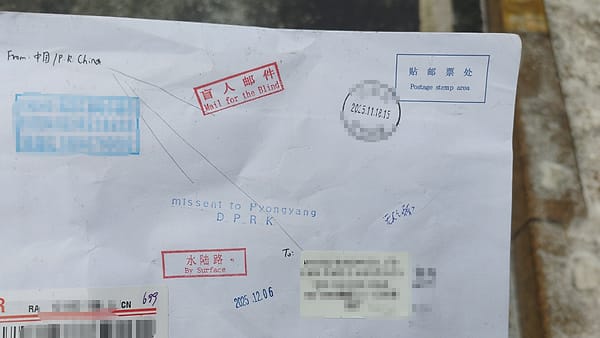
Returned mail proves that delivery did not occur and indicates why, and the reason is the useful part. Unknown at the address, refused, unclaimed, vacant and insufficient address each point at different conclusions about whether the record is stale, whether the recipient is avoiding contact, and what the sender should do next.
Notice to a Representative Rather Than a Party
Where a representative is on record, service on them is generally service on the party, and the party is bound by it. That arrangement works well until it breaks: a withdrawal never filed, a handover between advisers, a firm that closed, or a representative who never passed the document on. The record is what governs, and keeping it accurate is the whole of the protection.