Keeping an Address Current, and With Whom
Moving house is a single event that produces a dozen separate obligations, each of them owed to a different body, each with its own form and its own period, and not one of which is discharged by having already told any of the others.

The rule in short
Notice regimes deliver documents to whatever address is on the record, so keeping that record current is the recipient's obligation rather than anybody else's courtesy. The difficulty is that a single move creates separate duties toward every forum, agency and counterparty holding an address, and completing one of them does nothing for the rest.
Every notice regime rests on an address, and every address rests on somebody having updated it. The obligation sits with the person who moved, and it is owed separately to everybody holding a record.
Who needs telling
Every forum where a matter is pending. Each case, each body, separately, because records are not shared between them in most systems.
Agencies with an application under consideration. Applications generate correspondence for months, and a stale address means missing all of it.
Agencies with a continuing obligation. Some registrations require an address to be maintained regardless of whether anything is pending.
Representatives. Advisers hold their own records, and telling the forum does not tell them.
Counterparties under a contract. Notice clauses nominate an address, and changing it usually requires a formal notice in its own right.
Insurers and financial institutions. Correspondence from them frequently carries deadlines of its own.
Employers, where relevant to a filing. Some processes depend on an employer's records matching the individual's.
Anybody who has served something recently. A party in active correspondence needs the new address before the next document.
The postal service, last. Forwarding is a safety net rather than a substitute, per mail forwarding and what it misses.
How quickly it must be done
Frequently within days. Short notification windows are common where a matter is pending before an agency.
Sometimes before the move. Certain regimes require advance notice rather than confirmation afterwards.
Immediately for active proceedings. A document served during the gap is served at the old address and counts.
On a prescribed form. Many bodies accept changes only on their own form, and a letter is simply filed and ignored.
Separately for each matter. Where somebody has several cases with the same body, each may need its own notification.
With identifying details. Case or reference numbers, without which a change cannot be applied to the right record.
Before any deadline in the matter. The gap between moving and updating is where notices disappear.
Even for a temporary move. An absence of a few months still produces missed documents unless somebody arranges collection or redirection for the period.
With confirmation, where it is offered. Some bodies acknowledge a change of address, and an acknowledgment is worth chasing because it is the only evidence the notification was actually processed.
| Holder of the record | Told separately | Typical requirement |
|---|---|---|
| Each pending matter | Yes | Prescribed form |
| Each agency | Yes | Short deadline |
| Representative | Yes | Direct notification |
| Contract counterparty | Yes | Formal notice |
| Postal forwarding | Optional | Safety net only |
What happens if it is not done
Documents are served at the old address. And are usually validly served, whatever happened to them after arrival.
Periods run from that service. The recipient's time to respond begins without their knowledge, per deemed receipt, explained plainly.
Decisions may be made in absence. A hearing notice that never arrives produces a failure to appear with its own consequences.
Relief becomes harder. An applicant who did not update their address is in a weak position when asking to be excused.
Obligations may be breached independently. Some regimes treat failure to notify as a violation in itself, separate from anything missed.
Returned mail creates its own problems. Items coming back may or may not affect the position, per returned mail and what it proves.
Discovery comes late. Usually when an enforcement step or a decision surfaces through some other channel.
The record still says what it says. Arguing about where somebody actually lived rarely defeats service at the address on file.
Records are almost never shared between forums, agencies and counterparties. A single move produces a list of separate notifications, and completing eight of them still leaves the ninth address stale.
Doing it properly
Make a list before moving. Every body, matter and counterparty holding an address, written out rather than remembered.
Use the prescribed form each time. Checking what each body requires takes minutes and prevents a notification being disregarded.
Include every reference number. So that the change is applied to each matter rather than to one of them.
Keep proof of each notification. Receipts, submission confirmations and copies, filed together.
Confirm the change took effect. Where a system shows the address on file, check it rather than assuming.
Tell representatives directly. They hold separate records and frequently receive documents on the party's behalf.
Arrange interim collection. Somebody checking the old address during the transition catches what falls through.
Diarize a follow-up. A check two weeks afterwards catches the notifications that were submitted and never actually processed by anybody.
Update the entity records too. Where somebody acts through a company or a partnership, its registered and correspondence addresses are separate records with their own filing requirements and their own deadlines.
Keeping it current afterwards
Review addresses when anything changes. A new matter, a new representative or a new counterparty each adds a record to maintain.
Watch for correspondence that stops. A body that was writing regularly and goes quiet may be writing somewhere else.
Check portals periodically. Where an account shows the address on file, it is the quickest way to verify.
Do not rely on a single update. Bodies rarely share information, and one notification updates one record.
Keep an address stable where possible. Frequent moves multiply the exposure, and a fixed correspondence address reduces it.
Consider a service address. A representative's address or a stable third-party address removes the problem for many purposes.
Re-check when a matter becomes active. Before a period starts running is the time to confirm, not afterwards.
Record what was told to whom. A short log answers the question that arises when something is missed, per asking for a copy of what was sent.
Documents are served at the address on the record, which makes maintaining that record the recipient's obligation rather than anybody else's problem.
A move produces separate duties toward every forum, agency, representative and counterparty holding an address, and discharging one of them does nothing for the others.
Deadlines for notifying are frequently short, prescribed forms are common, and a change submitted in the wrong format is filed rather than applied.
Failure to update produces valid service at an address nobody is watching, periods running unknown to the recipient, decisions made in absence, and a weak position when relief is sought.
Where an application is already pending, an address change usually has to be filed with the body considering it rather than anywhere else, and within a short period. somebody who can answer a question about a pending case can point somebody to {{ANCHOR}}.
The reliable method is a written list made before moving, the correct form for each body, every reference number included, proof of each notification kept, and a follow-up check two weeks later.
Points to carry away
- Documents go to the address on the record, not the current one.
- Each body must be told separately.
- Deadlines for notifying are frequently short.
- Prescribed forms are common and matter.
- Keep proof of every notification.
Questions readers ask
Does telling one agency about a move update the others?
Almost never. Records are held separately by each forum, agency, representative and counterparty, and there is generally no mechanism that propagates a change between them. Each needs its own notification, frequently on its own prescribed form and within its own period. Where somebody has several matters with the same body, even those may require separate notifications carrying separate reference numbers, so the reliable approach is a written list rather than a general assumption.
What happens to documents sent to an old address?
They are usually validly served, and the period for responding begins whether or not anybody collected them. That is why the obligation sits with the person who moved: the system cannot function if service depends on the sender knowing where the recipient currently is. The consequences follow through the whole chain, including decisions made in absence, and an applicant who never updated their address is in a poor position when asking to be excused.
Is postal forwarding an adequate substitute?
No, though it is worth having as a safety net. Forwarding arrangements exclude categories of mail, expire after a set period, and introduce delay that can consume a short response window. They also do nothing about electronic notification sent to an account tied to the old record. Forwarding should be arranged in addition to notifying every body separately, never instead of it, and it should be treated as temporary cover during the transition.
Sources
- Federal Rules of Civil Procedure — Rule 5(b), Servicelaw.cornell.edu
- Federal Rules of Civil Procedure — Rule 11(a), Signing Pleadings; Addresslaw.cornell.edu
- Federal Rules of Civil Procedure — Rule 77(d), Notice of an Order or Judgmentlaw.cornell.edu
- Legal Information Institute — Address of Recordlaw.cornell.edu
- United States Postal Service — Official Change of Addressmoversguide.usps.com
- Legal Information Institute — Constructive Noticelaw.cornell.edu
Urban Justice Docket is a publication, not a law firm. This article states general rules and cites its sources; it is not advice about any particular case, and the law differs by state and changes over time.
More in Receiving Notice

Refusing to Accept a Document
A recipient who declines to take a document is generally treated as having been served, provided the server identified them and brought the document to them. Refusal also produces a contemporaneous record describing exactly what happened, which is unhelpful later, and it removes any argument that the recipient did not know a matter existed.
Returned Mail, and What It Proves
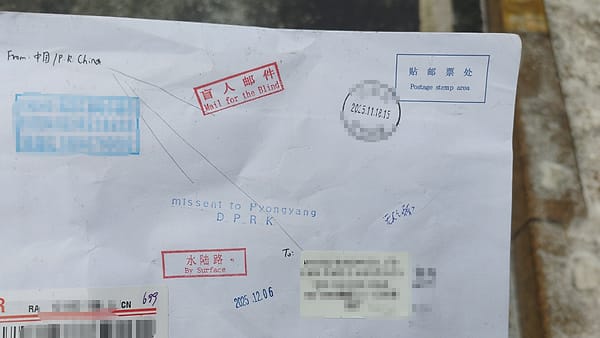
Returned mail proves that delivery did not occur and indicates why, and the reason is the useful part. Unknown at the address, refused, unclaimed, vacant and insufficient address each point at different conclusions about whether the record is stale, whether the recipient is avoiding contact, and what the sender should do next.

Notice to a Representative Rather Than a Party
Where a representative is on record, service on them is generally service on the party, and the party is bound by it. That arrangement works well until it breaks: a withdrawal never filed, a handover between advisers, a firm that closed, or a representative who never passed the document on. The record is what governs, and keeping it accurate is the whole of the protection.