Mail Forwarding, and What It Misses
Forwarding is treated as insurance against a missed notification, and it is a fairly weak form of it: limited in duration, entirely silent when it ends, slow enough to consume a short deadline, and blind to whole categories of item.

The rule in short
A forwarding arrangement redirects ordinary mail for a defined period, and it neither covers every category of item nor lasts indefinitely. Delay in redirection can consume a substantial part of a short response window, expiry produces no warning, and electronic notification is untouched by it. It is a useful supplement to notifying record holders directly and a poor replacement.
Forwarding is easy to arrange and easy to overestimate. Understanding what it does not do is more useful than knowing what it does.
What it covers
Ordinary addressed mail. The bulk of routine correspondence is redirected without difficulty for the period arranged.
For a defined period. Arrangements run for months rather than indefinitely, and the end date is fixed at the outset.
To a single destination. Redirection is to one address, which is a limitation where a household splits.
For named individuals. Coverage depends on the names registered, and an omitted household member receives nothing.
Domestically, usually. International redirection is available in some systems and is slower and more limited.
With a record, sometimes. Some services provide confirmation of what was redirected, which is occasionally useful evidence.
At a cost. Which is trivial against what a single missed notice costs, and is not the reason people skip it.
With identity verification. Arrangements normally require proof that the person requesting redirection is entitled to it, which takes a few days and should be started before the move rather than after it.
Alongside the real obligation. It supplements notifying every record holder individually, per keeping an address current.
Sometimes with a temporary option. Short-term redirection for a holiday or a secondment exists in most systems and is arranged differently from a permanent change, with a different duration and different limits.
What it misses
Items requiring a signature, sometimes. Certain tracked or restricted delivery categories are handled differently or not redirected at all.
Officially restricted items. Some classes of official mail are excluded from redirection by design.
Items addressed to an entity. Business mail to a company at a residential address may fall outside a personal arrangement.
Names not on the arrangement. Former household members, misspelled names and variants all produce items that are not redirected.
Anything after expiry. Which arrives at the old address and is nobody's responsibility to notice.
Electronic notification. Portal messages and email are entirely untouched, per notices that arrive only in a portal.
Personal delivery. A server attending the old address is unaffected by any postal arrangement.
Items already in transit awkwardly. Timing gaps at the beginning and the end of an arrangement produce items that fall between the two addresses and reach neither.
Anything hand-delivered. Documents put through a letterbox by a party, a representative or a courier who does not use the postal network are entirely outside the arrangement and reach the old address regardless.
| Item | Usually forwarded | Note |
|---|---|---|
| Ordinary addressed mail | Yes | With added delay |
| Some tracked or restricted items | Not always | Check the service terms |
| Business mail to an entity | Often not | Separate arrangement |
| Unregistered names | No | Register variants |
| Electronic notice | No | Update separately |
The delay problem
Redirection adds days. Items are intercepted, rerouted and delivered on a longer cycle than direct mail.
Short windows suffer most. A fourteen-day response period loses a meaningful fraction of itself to redirection.
The deemed date does not move. Service is calculated from dispatch, and forwarding delay is the recipient's problem, per deemed receipt, explained plainly.
Weekends compound it. A redirected item arriving late in a week can lose several further days.
Nobody is told about the delay. The recipient sees an arrival date and rarely knows how much time has already gone.
Urgent items are not prioritized. Redirection treats a hearing notice exactly as it treats a catalog.
Multiple redirections compound further. Two moves in a year can produce items chasing an address chain.
Plan the response accordingly. Anything arriving through forwarding should be treated as already partly overdue rather than as newly received.
Check the postmark, not the arrival. The envelope usually shows when the item was posted, which is what the deemed date was calculated from and therefore how much of the period has already gone.
Forwarding ends silently, and the first sign is usually that something important never arrived. A reminder set a month before expiry is the difference between renewing an arrangement and discovering it lapsed.
Expiry, and the silence around it
It ends on a fixed date. Which was set months earlier and which nobody diarized.
There is usually no warning. Items simply stop arriving, and nothing announces why.
Renewal is possible but must be initiated. The arrangement does not continue by default.
The old address may be occupied by somebody else. Who has no obligation to do anything with what arrives.
Discovery is late. Usually when something else reveals that correspondence has been going somewhere unknown.
Records may still be stale. Expiry exposes every record that was never updated during the covered period.
Diarize the end date. On the day the arrangement is made, along with a reminder a month before.
Use the period productively. Forwarding buys time in which to complete the real notifications rather than replacing any of them.
Renew only if the work is unfinished. A second period is worth arranging where records remain to be updated, and pointless where everything has already been notified and confirmed.
Practical handling
Arrange it, and then do the real work. The list of record holders still needs working through, one at a time.
Register every name. Including variants and former household members who may still receive correspondence.
Note the start and end dates. Both in the diary, with a reminder well before expiry.
Check the old address if possible. A cooperative occupant or a periodic visit catches what forwarding misses.
Treat forwarded items as urgent. Some of the response period has already gone by the time they arrive.
Keep the envelope. Redirection markings show the item was forwarded, which can matter in an application.
Update electronic addresses separately. Nothing about postal redirection touches an email address or a portal account.
Review after the first month. Gaps in coverage become visible quickly if anybody is looking for them.
Forwarding redirects ordinary mail to a single address for a defined period, and it is a supplement to notifying record holders rather than a substitute for it.
It misses several categories, including some tracked items, business mail, correspondence to unregistered names, personal delivery by a server, and every form of electronic notification.
Redirection adds days at exactly the point where days matter, and the deemed date of service does not move to accommodate it, so forwarded items should be treated as already partly overdue.
Arrangements expire on a fixed date with no warning, after which items arrive at an old address occupied by somebody with no obligation to do anything about them.
Used properly, the covered period is time in which to complete the real notifications, with the end date diarized on the day the arrangement is made.
Points to carry away
- Forwarding covers ordinary mail for a limited period.
- Several categories are commonly excluded.
- Redirection adds days to delivery.
- Expiry is silent and easily forgotten.
- It does nothing about electronic notification.
Questions readers ask
Is forwarding enough to avoid missing legal correspondence?
No. It covers ordinary mail for a limited period to a single address, and it excludes several categories, including some tracked items, mail addressed to an entity, correspondence to names that were not registered, and anything delivered personally by a server. It also does nothing at all about email or portal notification. Used as intended it buys time to notify every record holder directly; used as a substitute it produces exactly the gap it was meant to cover.
Does forwarding delay affect the deadline for responding?
Not usually. Service is generally calculated from dispatch or from a deemed date fixed by the rule, and delay introduced by redirection sits with the recipient. That means a document arriving through forwarding has already consumed part of the response period, sometimes a substantial part of a short one. The practical consequence is that forwarded items should be treated as urgent on arrival rather than as though the clock started when they appeared.
What happens when a forwarding arrangement expires?
Items simply begin arriving at the old address again, and nothing announces the change. Whoever occupies that address has no obligation to do anything with them. Because the expiry date was set months earlier, the usual pattern is that nobody notices until something important is discovered to have gone missing. Diarizing the end date on the day the arrangement is made, with a reminder a month before, is the whole of the fix.
Sources
- United States Postal Service — Official Change of Addressmoversguide.usps.com
- United States Postal Service — Mail Forwarding Informationfaq.usps.com
- Federal Rules of Civil Procedure — Rule 5(b)(2)(C), Mailinglaw.cornell.edu
- Federal Rules of Civil Procedure — Rule 6(d), Additional Time After Certain Kinds of Servicelaw.cornell.edu
- Legal Information Institute — Last Known Addresslaw.cornell.edu
- Legal Information Institute — Constructive Noticelaw.cornell.edu
Urban Justice Docket is a publication, not a law firm. This article states general rules and cites its sources; it is not advice about any particular case, and the law differs by state and changes over time.
More in Receiving Notice

Refusing to Accept a Document
A recipient who declines to take a document is generally treated as having been served, provided the server identified them and brought the document to them. Refusal also produces a contemporaneous record describing exactly what happened, which is unhelpful later, and it removes any argument that the recipient did not know a matter existed.
Returned Mail, and What It Proves
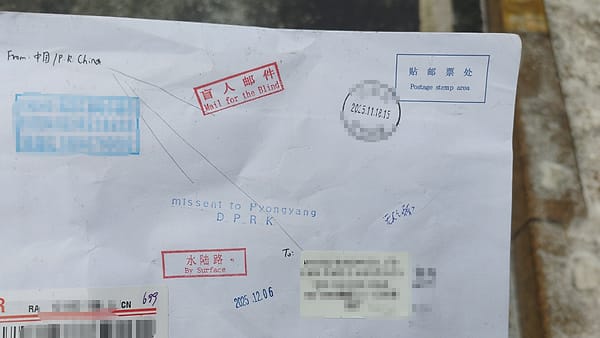
Returned mail proves that delivery did not occur and indicates why, and the reason is the useful part. Unknown at the address, refused, unclaimed, vacant and insufficient address each point at different conclusions about whether the record is stale, whether the recipient is avoiding contact, and what the sender should do next.
Notice to a Representative Rather Than a Party
Where a representative is on record, service on them is generally service on the party, and the party is bound by it. That arrangement works well until it breaks: a withdrawal never filed, a handover between advisers, a firm that closed, or a representative who never passed the document on. The record is what governs, and keeping it accurate is the whole of the protection.